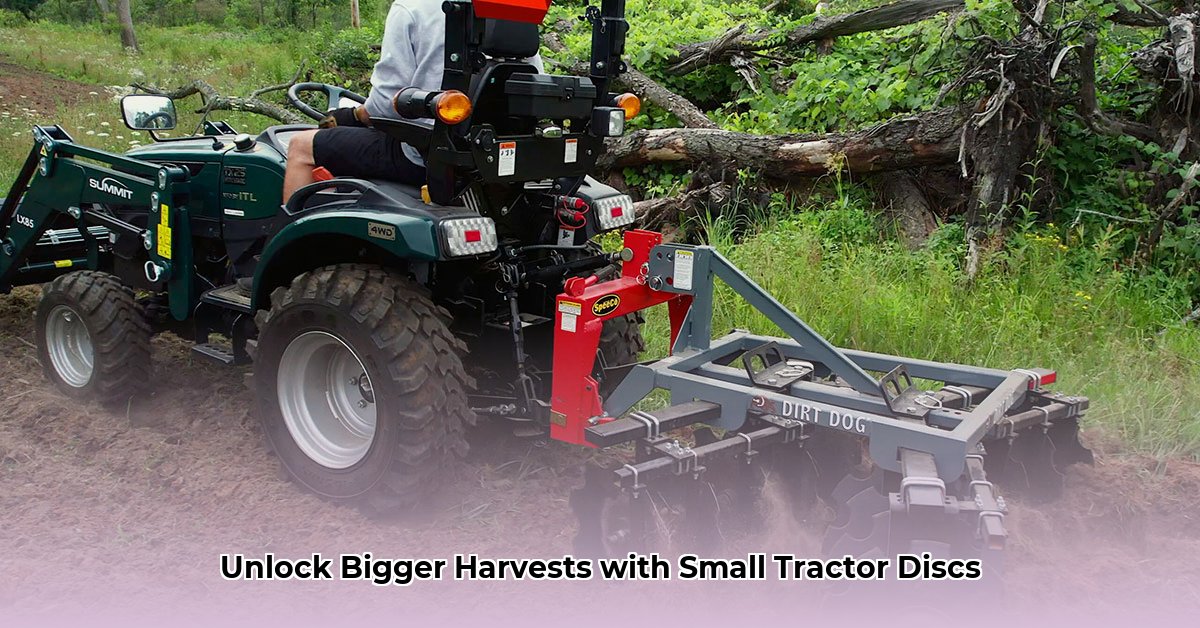
Using small tractor discs effectively is key to sustainable agriculture. This guide provides actionable steps for selecting, using, and maintaining these tools to improve soil health and increase yields. We’ll cover everything from choosing the right disc for your soil type to performing essential maintenance. For tractor power needs, check out this helpful guide on tractor power matching.
Choosing the Right Small Tractor Disc: A Precision Approach
Selecting the right disc is crucial. The wrong choice can damage your soil, reduce efficiency, and negate the benefits of reduced tillage. Remember, this isn't just about the size; it's about the entire system. Don't you want to maximize your farming efficiency?
Understanding Your Soil: The Unsung Hero
Before buying any equipment, analyze your soil type. Sandy soils require a different approach than heavy clay. Understanding your soil's texture and structure influences your disc selection and tillage depth. What's the ideal depth for your soil type? Knowing this is crucial for maximizing results.
Disc Selection Criteria: Size, Type, and Depth
Several factors determine the ideal disc:
Disc Size and Spacing: Larger discs cover more ground quickly, but closer spacing provides more thorough tillage, better weed control, and improved soil breakdown. Which is better for your needs? Consider your field size and the level of tillage required.
Disc Blade Type: Different blade designs offer varying levels of aggressiveness. Choose blades appropriate for your soil type. Heavy clay soil might require stronger, more robust blades than lighter sandy loam. Are you aware of the differences between various blade types and their impact on soil health?
Depth Control: Precise depth adjustment is essential. Too deep, and you risk damaging soil structure; too shallow, and you won’t achieve optimal results. How important is accurate depth control for efficient soil preparation?
Dr. Amelia Hernandez, Soil Science Professor at the University of California, Davis, emphasizes: "Precise depth control ensures you only disturb the soil as needed, preserving beneficial soil organisms and minimizing erosion."
Preparing for Tillage: A Step-by-Step Guide
Proper preparation is vital for success. Neglecting this can lead to inefficiency and equipment damage. Don't you want to ensure a smooth and effective tillage process?
- Pre-flight Check: Inspect the disc for loose bolts, bent blades, or damaged bearings before operation. A quick check can prevent major issues.
- Hitching Up: Securely attach the disc to your tractor following manufacturer instructions. Safety first!
- Depth Adjustment: Set the depth according to your soil type and goals. Start conservatively and adjust as needed.
- Test Run: Perform a light pass to gauge effectiveness and make adjustments before full tillage. A test run helps avoid unintended outcomes and fine-tune the process.
- Multiple Passes (if necessary): Make additional passes as needed, adjusting depth for optimal results. Remember the principle of minimizing soil disturbance.
Maintaining Your Small Tractor Disc for Longevity
Regular maintenance extends the disc's lifespan and ensures optimal performance. This prevents costly repairs and downtime. What are the benefits of a preventative maintenance schedule?
- Post-Tillage Clean-Up: Thoroughly clean the disc after each use to prevent corrosion and maintain smooth operation.
- Routine Maintenance: Lubricate moving parts and replace worn components promptly. This is an investment that pays off.
- Annual Professional Inspection: An annual checkup ensures everything is functioning optimally. Would you want to risk compromising the investment you made on your equipment?
Weighing the Pros and Cons: A Realistic Assessment
Small tractor discs offer numerous benefits but also present challenges. Understanding both sides assists in informed decision-making. How do the benefits of a small tractor disc outweigh its potential drawbacks?
| Advantages | Disadvantages |
|---|---|
| Effective soil preparation for planting | Requires tractor with sufficient power |
| Improves soil aeration and drainage | Potential for soil erosion if misused |
| Relatively affordable | Can be time-consuming for large areas |
| Versatile for various soil types | May compact soil if used improperly |
| Promotes better water infiltration | Requires careful operator skill |
Remember, sustainable farming involves a holistic approach beyond just using a disc. Proper use, coupled with responsible practices, contributes significantly to a productive and environmentally sound farm. What sustainable practices complement the use of small tractor discs most effectively? Researching and implementing various practices is key.